
The best flat roof material, honestly compared
Four coverings dominate flat roofs: felt, EPDM rubber, GRP fibreglass and lead. We lay two of them, GRP at £110 to £160 per square metre and lead at £220 to £290, and here is why, with an honest look at the other two.
01The four options at a glance
Ask three York roofers for the best flat roof material and you will usually hear the one they fit most. We are no different, so here is our position up front: we lay GRP fibreglass and lead, and nothing else, on a flat roof. Felt and EPDM rubber are real products with their own strengths, and you will see them on plenty of York garages and extensions, so they are in the comparison too. What follows is how the four stack up on the things that actually decide it: lifespan, joints, finish and where each one belongs.
Lifespans are general manufacturer and trade guidance. Prices are our bands plus VAT for the covering supplied and fitted, correct as of October 2026. Your price is fixed in writing within 24 hours of the free survey, or get a band now with the instant estimate tool.
02Felt and EPDM, the honest view
Felt has a worse name than it deserves, because most people picture the old pour-and-roll felt that curled and cracked inside a decade. Modern torch-on felt is a built-up system of two or three heat-bonded layers with a mineral cap sheet, and it lasts around 10 to 20 years. Its weakness is the one every sheet system shares: the laps between sheets, the upstands and the edge trims are where it lets water in, and felt has more of those joints than anything else on this list.
EPDM rubber goes the other way. It is laid as a single synthetic sheet, glued to the deck, often in one piece across a small roof, and a good one reaches 25 to 30 years or more. It flexes well with the weather. The trade-offs are a soft surface that does not love foot traffic, and seams and corners that rely on adhesive and tape wherever the roof is too big or too fiddly for one sheet. Both are legitimate choices. We simply prefer a covering with no joints at all, which brings us to GRP.
03GRP and lead, the two we lay
GRP fibreglass is resin and glass matting laminated onto the deck and cured in place, so the finished roof is one continuous hard shell with no laps or glued seams to fail. It takes foot traffic, looks crisp on a visible roof or under a balcony, and lasts 20 to 30 years on a sound deck at £110 to £160 per square metre. That makes it our answer for most garages, extensions and dormers in York. Lead is the old master: code 6 sheet dressed and bossed by hand, welted at the joints so it can move, and quietly outlasting everything at well past 100 years. It costs the most per metre, so it earns its place on bays, porches, period dormers and small runs where the area is modest and the look matters.
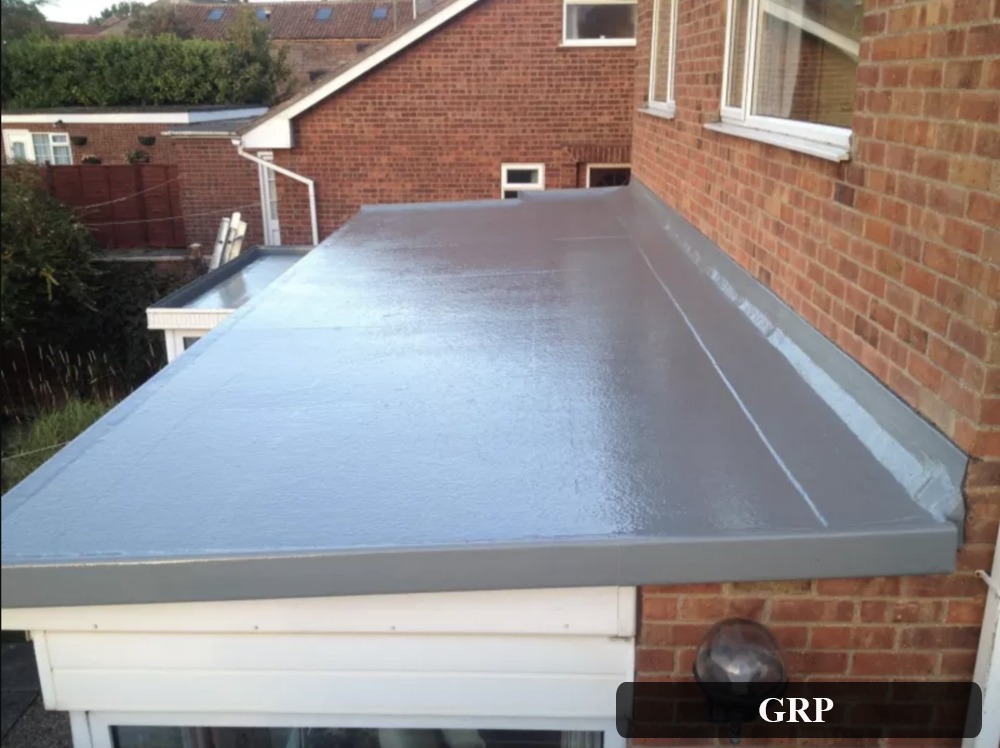
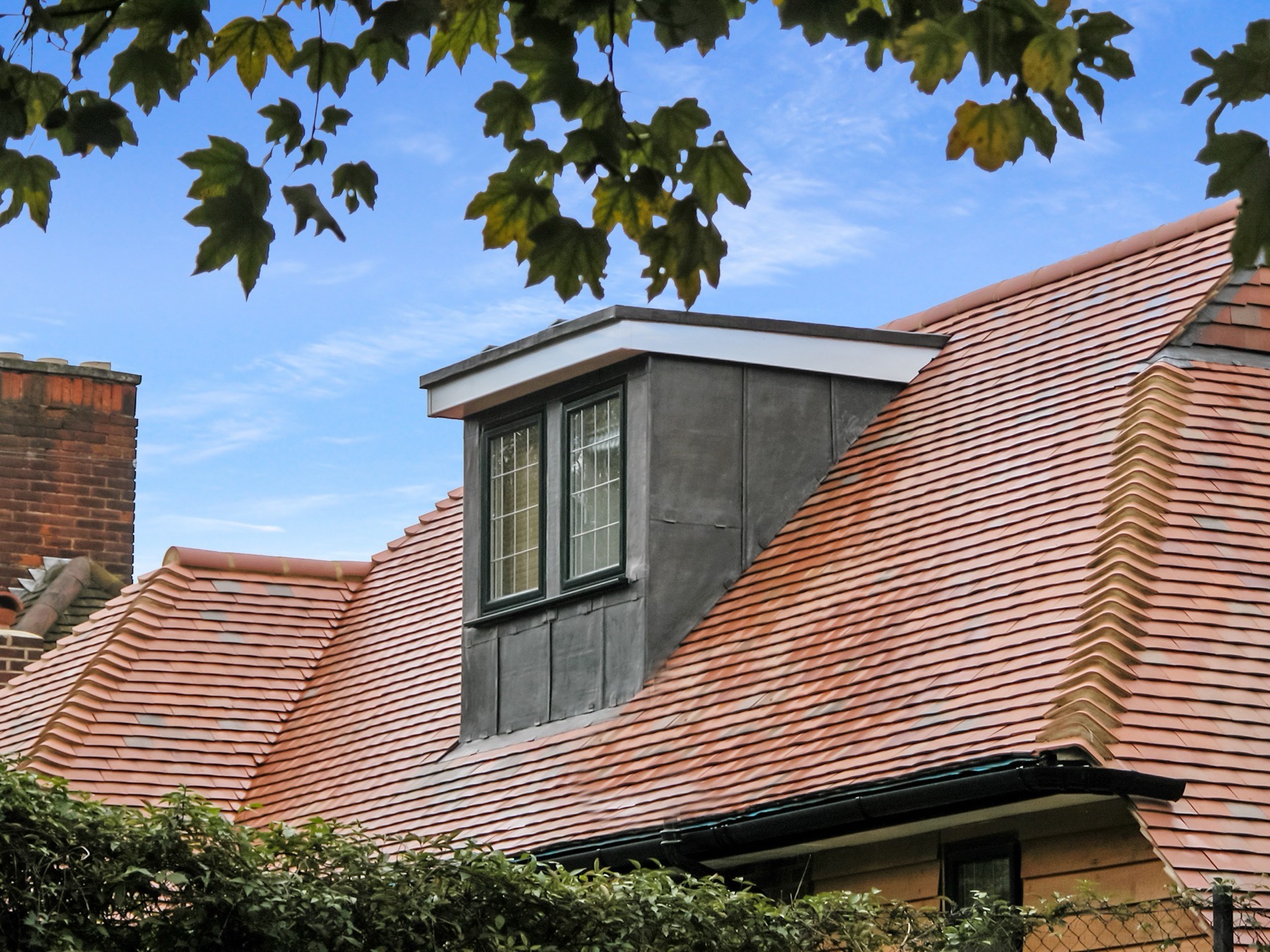
Years a properly dressed lead flat roof can last, against 20 to 30 for GRP and 10 to 20 for felt. Lead costs the most per metre but usually covers the smallest area. Manufacturer service lives, general guidance
04Joints, weak points and what moves the price
Every flat roof fails at its joints and details before its middle, so the number of joints a material has tells you a lot about its life. Beyond the covering itself, a handful of things set what you pay:
05Which should you choose
Match the material to the roof and the answer is usually clear. A garage, an extension, a dormer or a balcony: GRP fibreglass, because it is seamless, walkable and lasts a generation for a sensible price per metre. A bay top, a porch, a period dormer or any short run on an older house: lead, because it lasts longer than the house and looks right on it. If you already have a felt or rubber roof that is failing, the usual fix is to strip it and replace it with GRP rather than patch the joints again. If you are unsure, a survey settles it in one visit.
The dearest covering is not automatically the best one for your roof. GRP on a garage or extension and lead on a bay or dormer are both the right call, and the deck and the workmanship under either matter as much as the material.
06Questions we hear every week
What is the best flat roof material?
Is felt or EPDM rubber any good?
Which lasts longer, GRP or lead?
Can you replace an old felt flat roof with GRP?
Get a fixed figure for your roof
Two minutes with the estimate tool gives you a realistic band now. The free survey turns it into a written price, fixed for as long as you need to decide.