
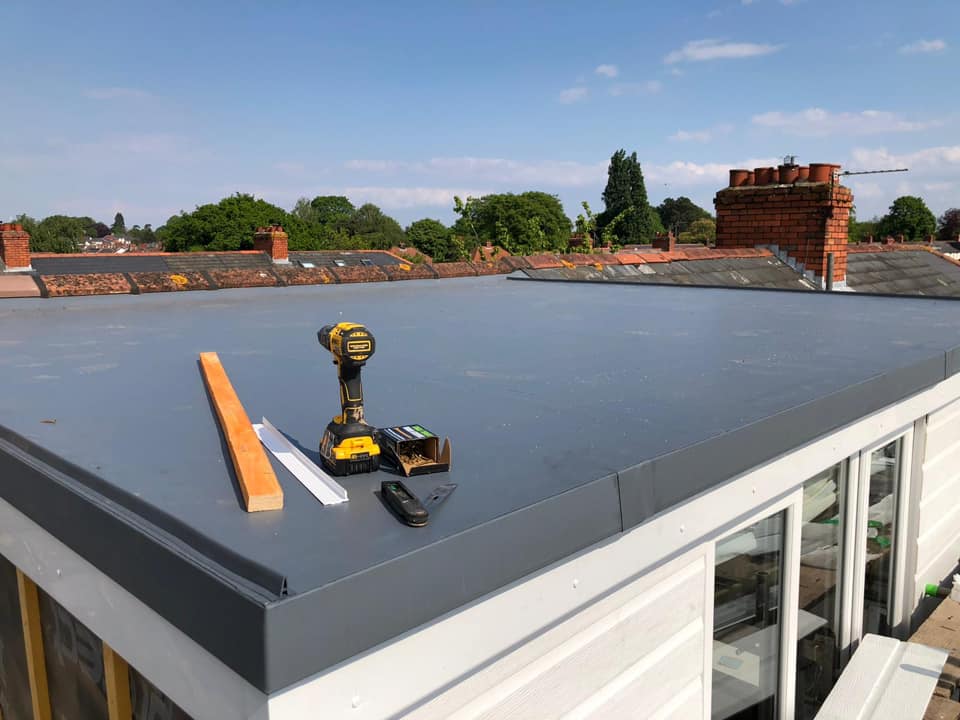
How long does a flat roof last
How long a flat roof lasts comes down to the covering. Felt manages 10 to 20 years, GRP fibreglass 20 to 30, EPDM rubber 25 to 30 or more, and lead well past 100. Detailing and drainage decide where in that range yours lands.
01How long does a flat roof last
There is no single answer, because a flat roof is only as good as the material sitting on top of it. A cheap single-layer felt garage roof and a properly laid rubber roof are both flat roofs, but they are decades apart in service life. The two things that decide the outcome are the covering you choose and how well the roof was detailed and drained. Get those right and a flat roof is not the short-lived compromise its reputation suggests. Get them wrong and it will let you down early whatever the material. Below is what each of the common coverings should give you, and what shortens that in practice.
02Lifespan by material
These are general service lives from manufacturer and trade guidance, not a promise for one specific roof. Fitting quality, falls and exposure all move the figure, but as a starting point they show how far apart the options are:
| Covering | Typical lifespan | Notes |
|---|---|---|
| Felt / torch-on | 10 to 20 yrs | Value option, many joints, blisters and splits are the usual failure. |
| GRP fibreglass | 20 to 30 yrs | Seamless, hard-wearing, cracks if the deck below flexes. |
| EPDM rubber | 25 to 30+ yrs | One-piece sheet, very few joints, flexes with the building. |
| Lead | 100+ yrs | Outlasts everything on small areas and detailing, priced to match. |
General material service lives, not a quote for your roof. The covering matters, but so does the roofer: a mid-life covering fitted well will outlast a longer-life one fitted badly. For a straight comparison of the systems, see our guide to roofing materials.
03What cuts a flat roof's life short
Very few flat roofs wear out evenly across the middle. They fail at the weak points, and almost always for one of these reasons:
Years a quality EPDM rubber roof should last, laid as a single sheet with far fewer joints than felt. That is where much of the extra life comes from: fewer seams means fewer places to fail. Manufacturer service lives, general guidance
04The warning signs it is near the end
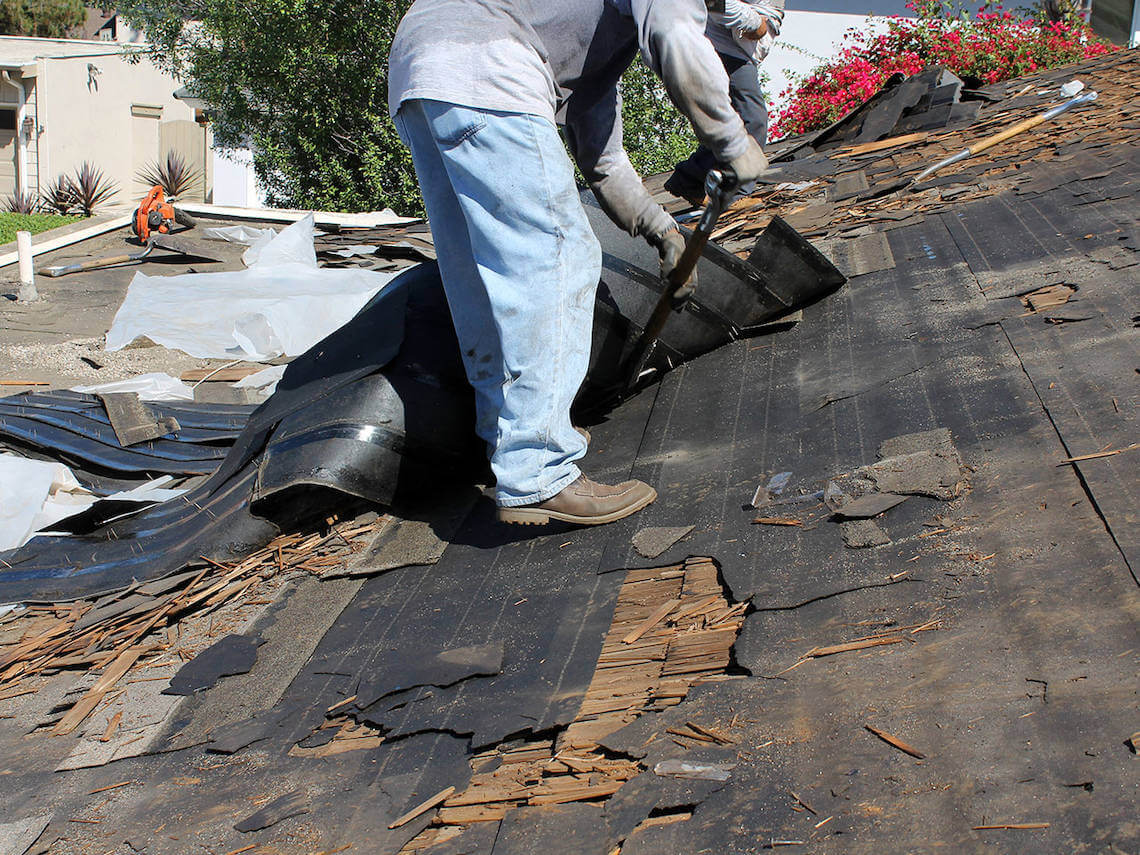
A flat roof rarely fails overnight. It tells you first, and the earlier you read the signs the more likely a repair will do instead of a replacement. Look for blisters and bubbles in the surface, splits or cracks along the seams, and ponding that never seems to dry out. Inside, damp patches or brown staining on the ceiling below are the roof's way of saying water is already getting in. Check the edges too: flashings that have lifted or pulled away from the wall are a common entry point. One of these on its own is often fixable. Several of them together usually mean the covering has reached the end of its service life and is due for renewal rather than another patch. If you are weighing that up, our flat roof services page explains how we survey and what a replacement involves.
05Repair or replace
The judgement is the same as on any roof: fix what is sound, renew what is spent. If the covering has plenty of life left and the trouble is a single split, a lifted flashing or a blocked outlet, a repair is the right call and buys you years. Replace when the same roof keeps leaking somewhere new, when the covering is at or past its typical lifespan, or when ponding and poor falls mean any patch is only ever temporary. At that point it is worth stepping up the material as well. Moving from tired felt to EPDM rubber or GRP fibreglass can roughly double the service life for a covering that was always going to need replacing anyway.
The material sets the ceiling, but the roofer decides whether you reach it. A rubber roof laid over poor falls will still pond and still fail early, so fix the drainage and the detailing, not just the surface.
06Questions we hear every week
How long does a flat roof last?
What makes a flat roof fail early?
How do I know my flat roof needs replacing?
Is EPDM rubber better than felt?
Get a fixed figure for your roof
Two minutes with the estimate tool gives you a realistic band now. The free survey turns it into a written price, fixed for as long as you need to decide.