

Roof leaking in heavy rain? What to do tonight, and where the water is getting in
Water on the ceiling at nine o’clock at night is a bucket job first and a roofing job second. Catch the water, protect the ceiling, stay off the roof, take three photographs. Then here is where the water is probably getting in, what the fix usually is, and what a make-safe costs in York.
01What to do tonight
Deal with the ceiling first. The roof can wait. Get a bucket or a washing-up bowl under the drip and a towel around it, because a drip that wanders will find the carpet. Move anything electrical, and anything you care about, out from under the wet patch. If the plasterboard is sagging into a bulge, it is holding a bath of water. Push a screwdriver or a skewer into the lowest point of the bulge, over the bucket, and let it drain. You fill a small hole in ten minutes. You replace a collapsed ceiling.
If water is anywhere near a light fitting or a smoke alarm, switch the lighting circuit off at the consumer unit and use a torch or a lamp plugged in elsewhere. Then open the loft hatch and look up with the torch. You are looking for a wet rafter, a dark line running down the underlay, a drip you can hear, or a spot of daylight where there should be none. Take a photo of whatever you find, even if it is just a wet patch of felt.
Do not go on the roof, even for one tile. Wet slate and wet moss give your boots no grip, and a fall from a bungalow eaves still breaks bones. A tarpaulin thrown over from a ladder blows off within the hour and takes a tile with it. The roof will still be there in the morning.
02Is it a leak at all?
Most of the wet-loft calls we take in winter turn out to be condensation, and the difference decides everything you do next. Condensation is spread across the whole underside of the felt, beads on it like the inside of a cold window, and is worst on cold, still mornings. It eases as the day warms up and has nothing to do with whether it rained. A leak is local: a line down one rafter, a patch below one point, worse during a downpour and for a few hours after it. If the damp follows the weather rather than the temperature, it is a leak and this guide applies. If it follows the temperature, read condensation in your loft instead, because no amount of roofing will fix it.
03Where the water is getting in: the six usual places on a York roof
The stain marks where the water drops, not where it gets in. Water gets through the covering, runs down the underlay, and drops where the felt sags or a batten catches it, often a metre or more downslope. On the terraces, semis and villas we work on across York, six details account for nearly every leak we trace.
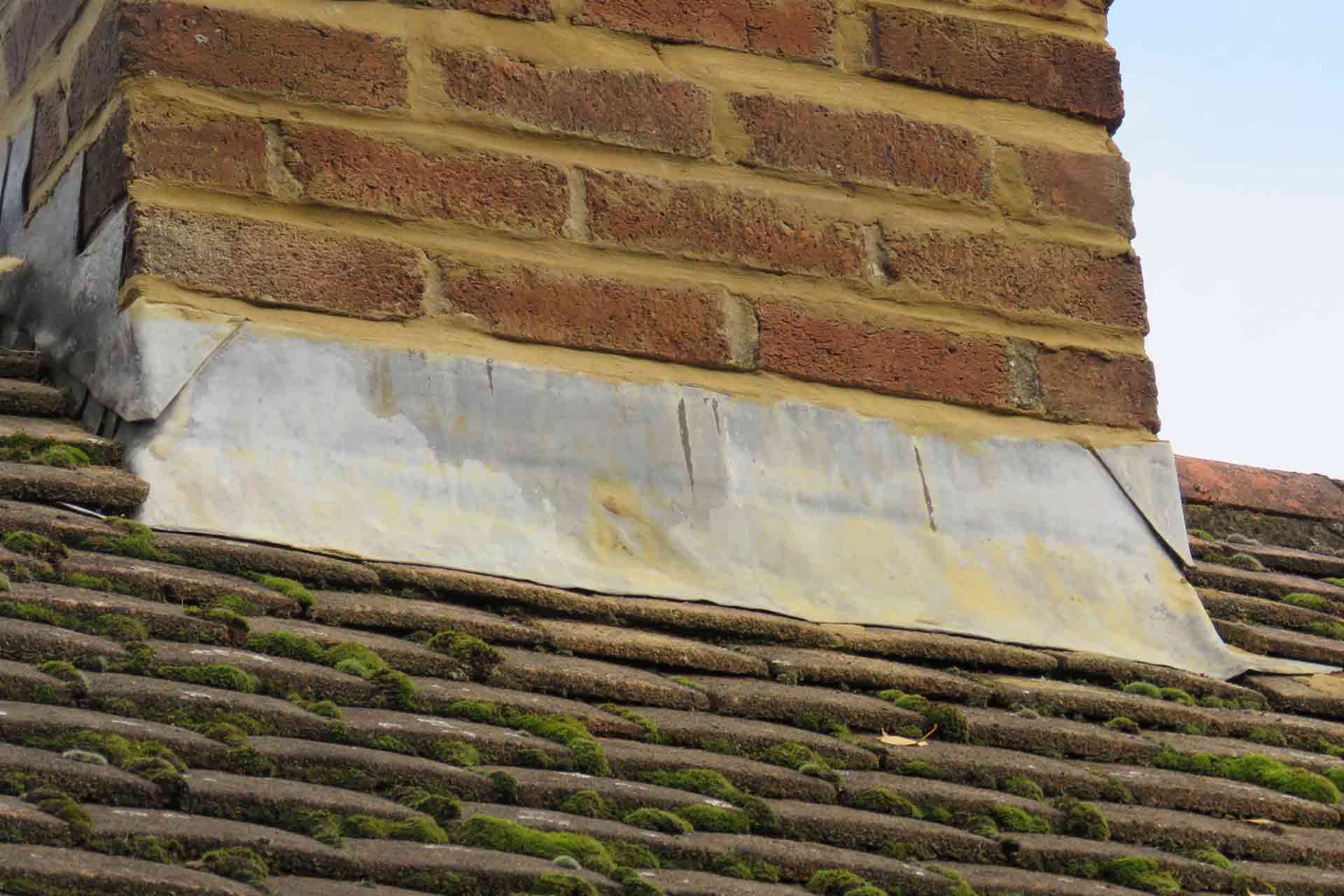

04Can you fix a leaking roof from the inside?
No. The water is coming through the covering and running on top of the underlay. Anything you do from the loft is below that layer, so sealant, tape or expanding foam on the felt does nothing except make the roofer’s job harder when the proper repair comes. What you can do from inside is buy a night: a bucket on the loft boards under the drip, or a sheet of plastic pinned so the water runs to the bucket rather than along the rafter to the ceiling. The fix is on the outside, and it is a roofer’s job.
05What the fix usually is, and what it costs
If the roof is actively pouring in, the first visit is a make-safe. We get a tarpaulin over the affected area, weighted with battens and sealed at the edges, so the house is dry by the end of the day. Our emergency roof repair runs a two-hour callback Monday to Saturday daytime, with same-day or next-morning attendance for almost every call in York and the villages. A temporary make-safe is typically £180 to £350, and it comes off the price if we do the permanent repair. There is no emergency premium over our normal rates.
The permanent repair follows once the roof has dried, usually within the week. Most leaks turn out to be a small job: a few slipped slates, a couple of broken pantiles or a section of ridge re-bedded, typically £150 to £350. Medium repairs, a valley section or a run of flashing, are £400 to £900. Same-day or next-day reactive repairs run £250 to £750 depending on the scope. If it crosses into a partial reroof, we price it after the free survey. We fix every price in writing before we start, and repairs carry the same written workmanship guarantee as a new roof.
If a storm did the damage and you want to claim, we photograph everything from the scaffold and provide a written report with the cause, the scope and the cost on request. Most insurers accept it directly for residential roof damage under £5,000. Making the roof safe first does not stop you claiming; insurers expect you to limit the damage. A full guide to what buildings insurance does and does not cover on roofs is coming next.
Our callback window for a leak, Monday to Saturday daytime. Leaks go to the front of the diary, and most are made safe the same day or the next morning. EJL emergency roof repair, York
06What to send a roofer so you get a price tonight
Three photographs and a postcode. One of the stain or the drip, one of the loft from the hatch (torch on, flash off), and one of the roof from the street or the garden, showing the chimney, the valley or the extension if that is where you think it is. A ballpark comes back the same day from a decent set of photos, and the survey itself is free. Do not wait for daylight to send them; the earlier they land, the earlier you are in the morning’s run.
07Questions we hear every week
What should I do if my roof is leaking during heavy rain?
How do I find where my roof is leaking?
Is a damp patch on the ceiling always a leak?
Can a leaking roof be fixed in the rain?
How much does it cost to fix a leaking roof in York?
Get a fixed figure for your roof
Two minutes with the estimate tool gives you a realistic band now. The free survey turns it into a written price, fixed for as long as you need to decide.