
Roof valleys: why they leak and how they are fixed
A roof valley is the internal angle where two pitched slopes meet. It carries more water than any other part of the roof, so it is where most leaks start. A blocked valley is a small repair. A cracked cement valley needs relining in code 5 lead, at £85 to £130 per metre. Here is how to tell.
01What a roof valley is and why it matters
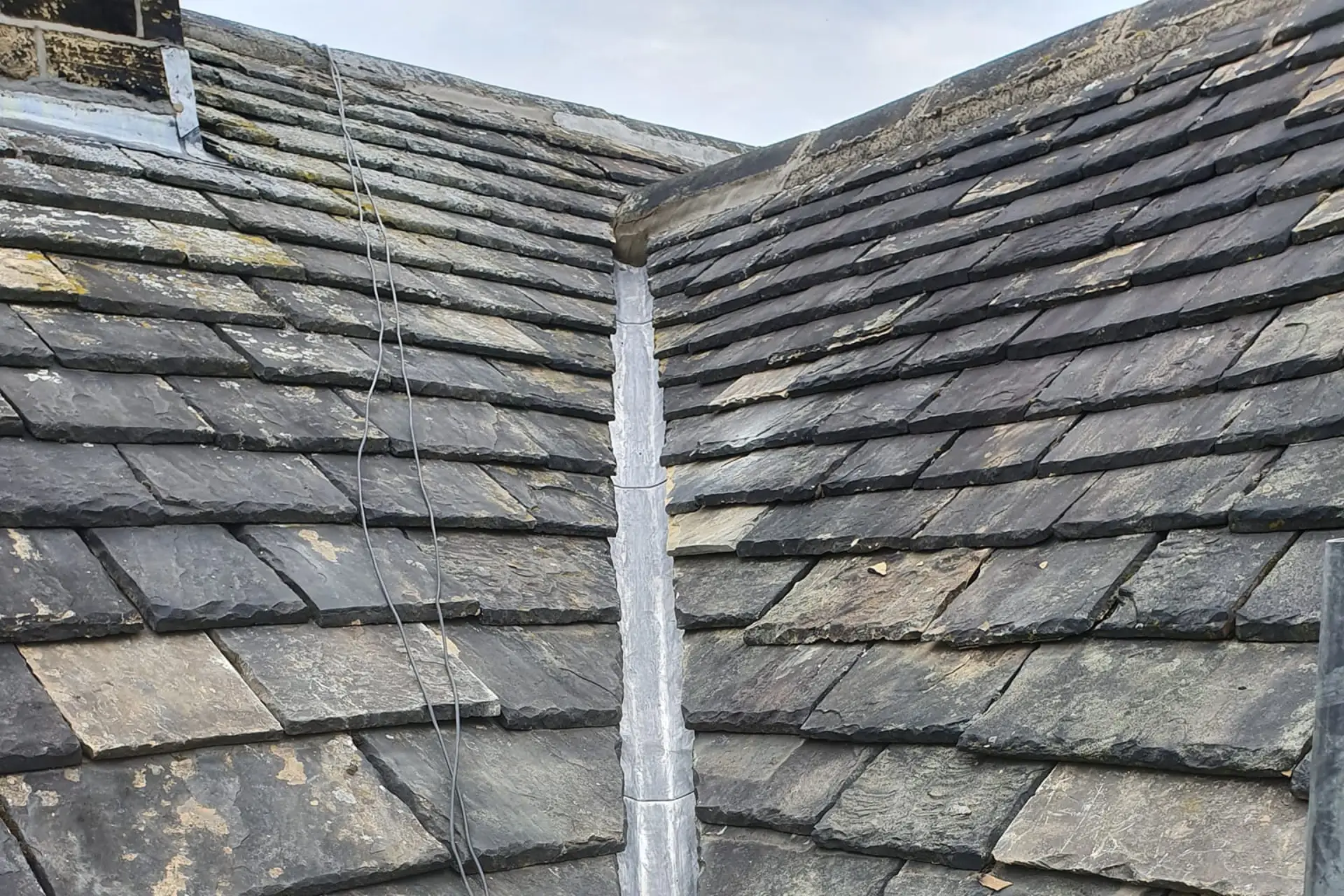
A roof valley is the internal angle where two pitched roof slopes meet: the inward fold where an extension or dormer roof runs into the main slope. Both slopes shed their rain into that one channel, so a roof valley carries more water than any other part of the roof. When a pitched roof leaks and there is no obvious broken tile, the valley is the first place we look. It is also the part most often built down to a price, because every lining looks the same from the garden.
02Dry valley roof, mortared, open lead or GRP
There are four kinds of valley on York roofs. Older terraces and semis mostly have mortared cement fillet valleys or open lead. Anything built or reroofed since the 1990s is more likely to have a dry valley roof detail, a preformed trough with no mortar, or a moulded GRP trough.
| Valley type | Typical life | Common failure |
|---|---|---|
| Open lead valley | Generations, if the code and drops are right | Fatigue splits in thin or over-long lead |
| Mortared (cement fillet) | A couple of decades before it cracks | Mortar shrinks, cracks and drops out |
| Dry valley | A few decades, depending on the trough | Edge tiles slip, trough lifts, blocks easily |
| GRP valley trough | A few decades, less in full sun | Hairline splits, brittle ends |
Lifespans are general guidance, not a promise about your roof. Establishing the type is the first job on a free survey.
03Why roof valleys leak
Six details account for nearly every valley leak we trace across York:
04The signs inside the house
A valley leak usually shows up a long way from where it gets in. The classic sign is a damp patch or brown stain on a ceiling below the junction of two roof planes, worse after heavy rain. Upstairs, look for a drip or tide mark at the top of a wall where two roofs meet, often in a back bedroom over an extension. The pattern matters: a leak that only appears in a downpour points to a blockage or a failed lap, while one that has become steady points to a split in the lead or a crack in the fillet.
05Roof valley repair: fix it or reline it
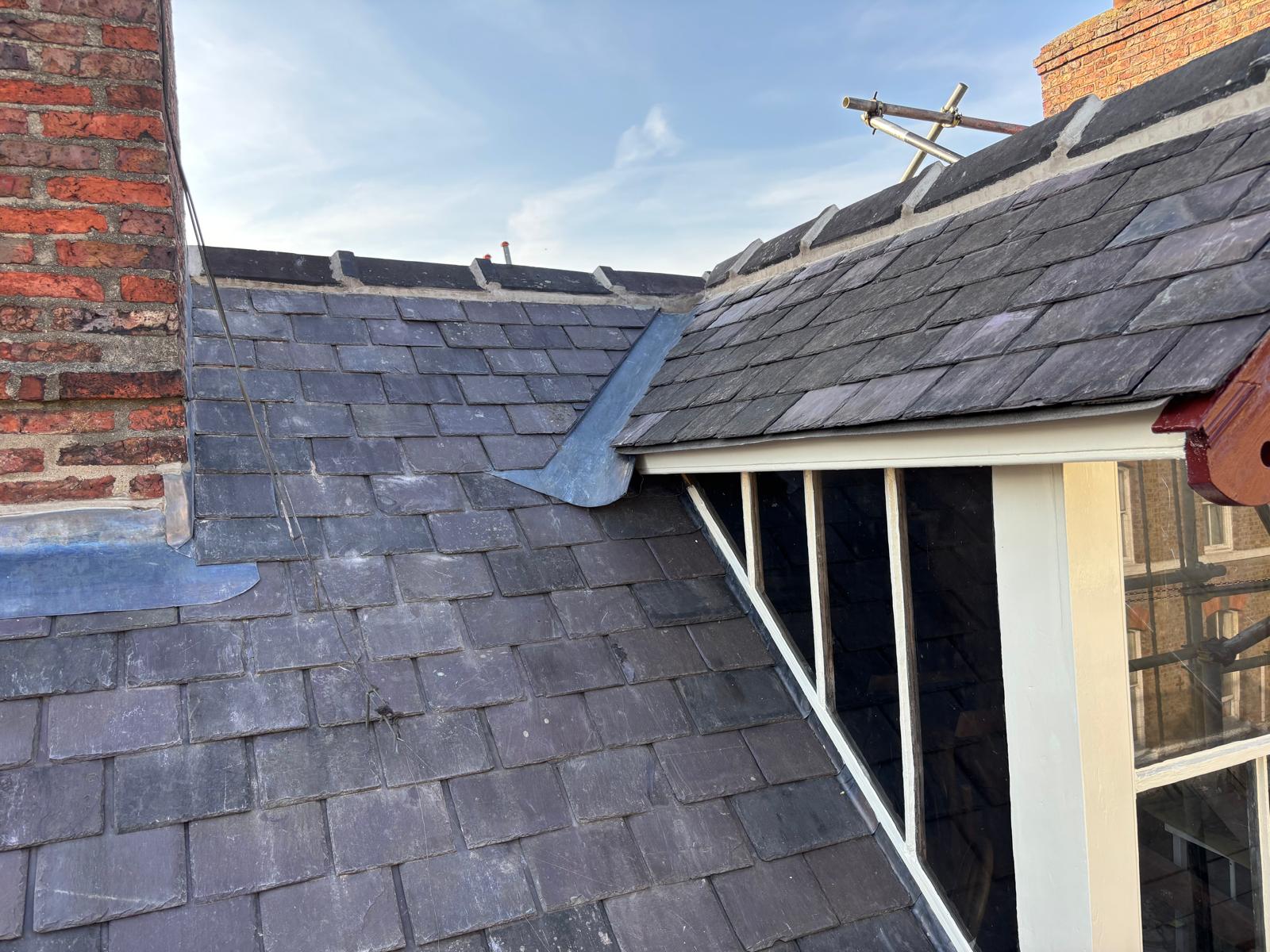
It depends on the type, and we will tell you when a reline is not needed. A blocked valley needs clearing and the edge tiles re-bedding, a small repair under our roof repairs service rather than a leadwork job. Small GRP splits can be patched while the trough is otherwise sound. Two faults do not repair. A cracked cement fillet valley cannot be reliably repaired, because mortar that cracked once will crack again, so it should be relined in code 5 lead. And lead with fatigue cracks across much of its surface is finished: patching one split only moves the next one along the sheet.
If someone offers to seal a cracked cement valley with a tube of something, say no. Mastic over a failed fillet buys one winter at most and makes the proper job messier later.
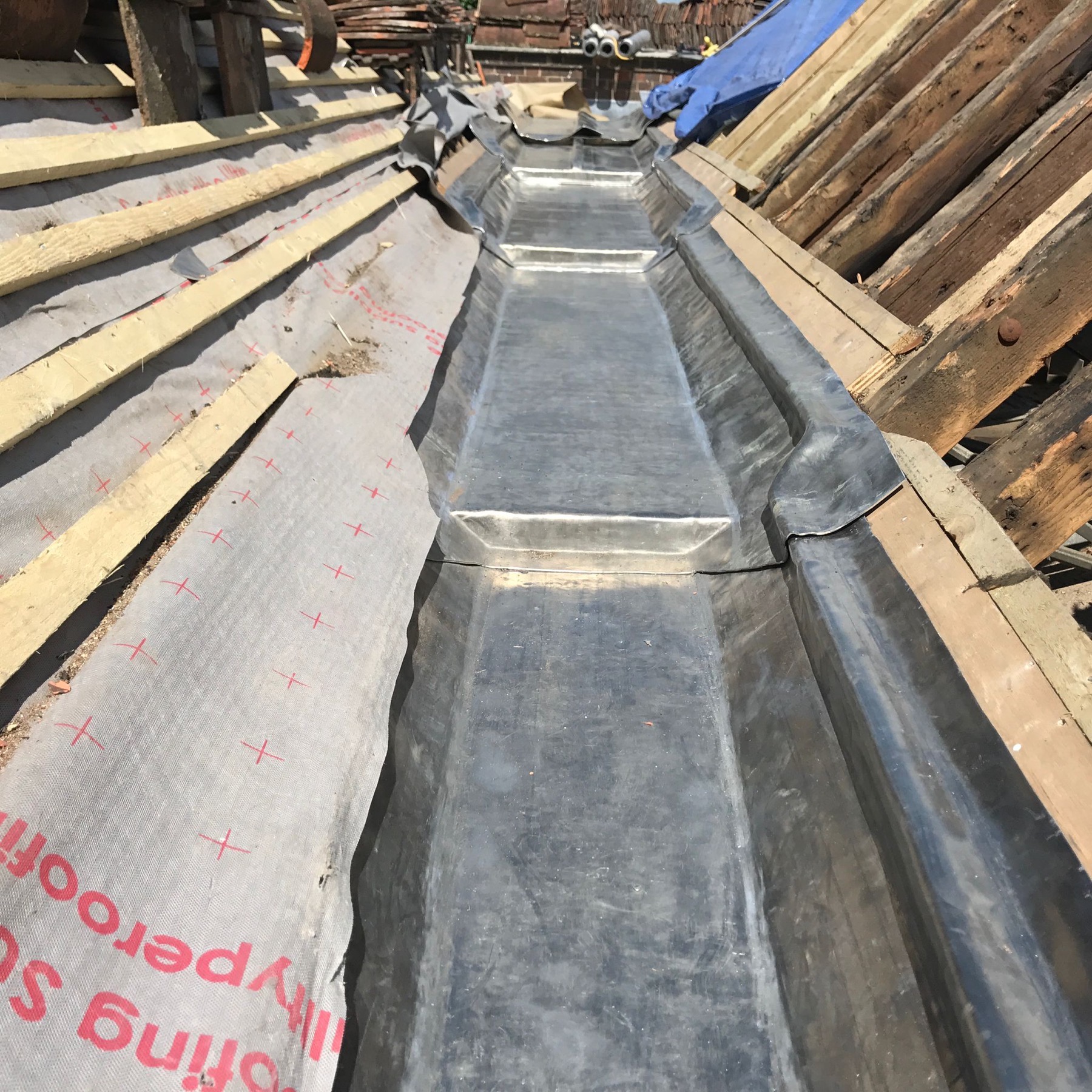
The maximum length of each lead sheet in a valley. Longer sheets cannot move with the temperature and split, which is why code 5 goes down in short drops joined with lapped welts. BS EN 12588 sheet lead guidance, general
06What a proper lead valley reline involves
A lead valley reline is a small reroof of the strip either side of the angle. We strip a metre of tiles or slates each side, lift the old lining out and make good any rotted valley boards. Fresh underlay laps into the valley. Then the lead: code 5 as standard, code 6 where the valley is wide or takes heavy run-off, in drops no longer than 1.5 metres. Each welt folds over the sheet below and the next sheet laps onto it, so water always runs over a joint, never into one. Nothing is soldered or siliconed. The tiles are re-bedded either side on new undercloak. Most take two to four days and carry our 20 year written guarantee like the rest of our leadwork.
Indicatively, a lead valley reline runs £85 to £130 per linear metre plus VAT, moving with the code, the access and how many tiles need re-bedding. Your price is fixed in writing within 24 hours of the free survey, or get a band now with the instant estimate tool. If the valley is actively pouring in, our emergency roof repair makes it safe with a temporary covering and the reline follows once it has dried. Storm damage that has torn the lining is handled the same way.
07Questions we hear every week
What is a roof valley?
Why does a roof valley leak?
Can a cement roof valley be repaired?
How much does a lead valley cost?
Get a fixed figure for your roof
Two minutes with the estimate tool gives you a realistic band now. The free survey turns it into a written price, fixed for as long as you need to decide.