
Does home insurance cover roof leaks? A York roofer’s honest answer
Home insurance usually covers a roof leak when a sudden event caused it, like a storm, and usually does not when the cause is wear and tear or a slow failure. Here is how that plays out on York homes, when a claim is worth making, and what your insurer will ask for.
01Does home insurance cover roof leaks?
Sometimes, and the deciding question is almost never the leak itself. It is what caused it. Does home insurance cover roof leaks after a storm has torn slates off? Usually, yes, under the buildings section of the policy. Does it cover a leak that has been creeping in for a year because the valley lead has split with age? Usually not. Every autumn and winter, when the storms come across Yorkshire, we get calls from York homeowners who have a wet ceiling and an insurer on the other line, and the same confusion comes up each time.
The search results for this question are all insurers and comparison sites. They can tell you what a policy says. What they cannot tell you is what actually happened to your roof, and that is the part your claim turns on. That is a roofer’s job, so this guide is the practical half: what tends to be covered, what tends not to be, whether a claim is worth it, and what to hand your insurer.
02Does house insurance cover a leaking roof? It depends on the cause
Buildings insurance is built around sudden, one-off events. A gale that lifts a run of ridge tiles, a branch that comes down through the slates, or heavy snow that cracks a flat roof are the kind of thing it exists for. Damage that builds up slowly is treated as maintenance, which is the homeowner’s responsibility. So when people ask whether home insurance covers leaks in general, the honest answer is that it covers the event, not the age of the roof.
| Cause of the leak | Usually covered? | What the insurer will ask |
|---|---|---|
| Storm lifts or breaks tiles or slates | Usually covered | Date of the storm, photos, a roofer’s report on cause |
| Falling tree or branch | Usually covered | Photos of the tree and the roof, date, repair quote |
| Worn-out felt, battens or mortar | Usually not covered | Age and condition of the roof, maintenance history |
| Slow leak at a valley or flashing | Usually not covered | How long it has been leaking, earlier signs of damp |
| Blocked gutters overflowing | Usually not covered | When the gutters were last cleared |
| Damage inside from a covered leak | Often covered | Photos of ceilings, walls and contents, receipts |
A general guide only. Policies differ, so read your own policy wording or call your insurer. Interior damage from a sudden leak is sometimes covered even when the roof repair is not, which is worth asking about.
03Does home insurance cover roof repairs? Storm damage versus wear and tear
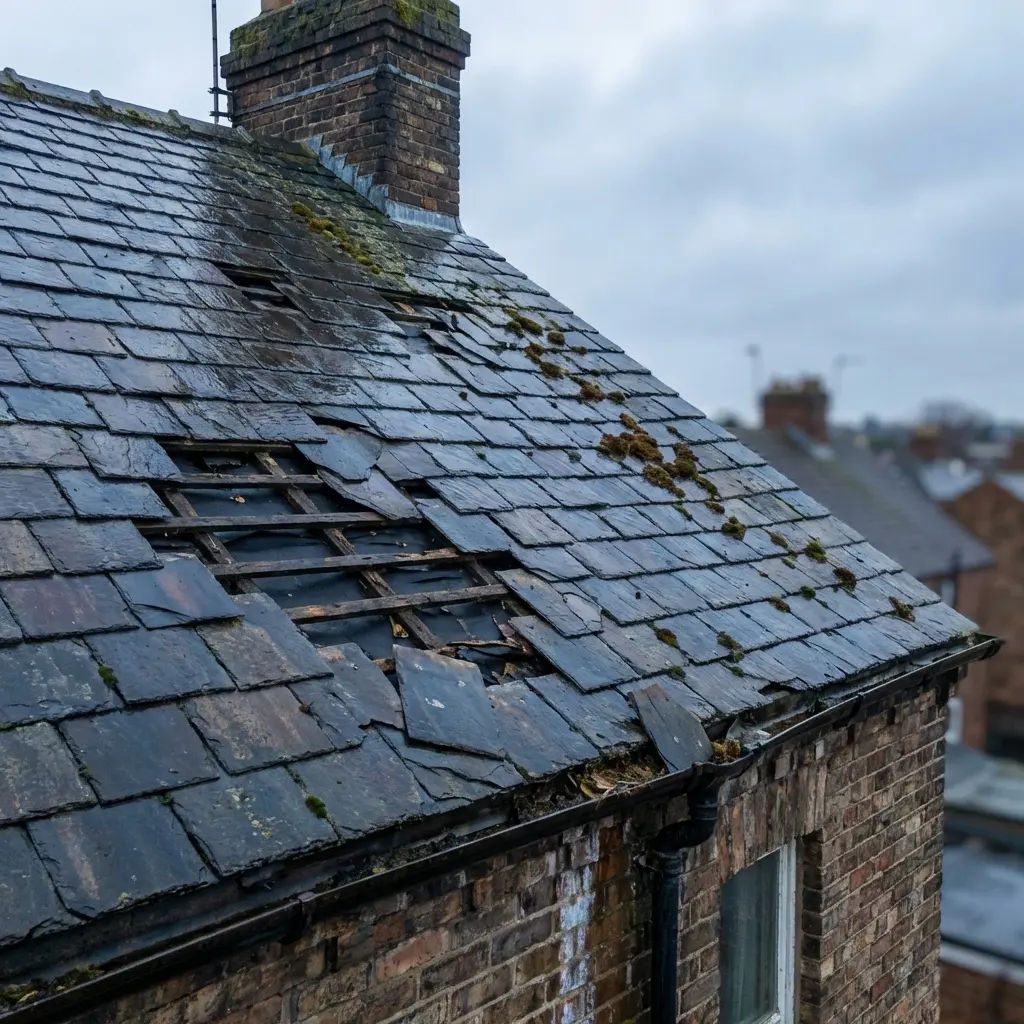
This is where most claims are won or lost. A storm can be the final push on a roof that was already tired, and an insurer will look hard at whether the wind caused the damage or just exposed it. Slates that were nail-sick, ridge tiles held on by crumbling mortar, or a flat roof well past its service life are likely to be treated as wear and tear, even if they came off in a gale.
What counts as a “storm” is set by your own policy, not by the weather forecast. Policies differ on how they define it and what evidence they want, so read the definitions section of your own policy wording or call your insurer and ask. If you want neutral background on how home insurance claims generally work, the Association of British Insurers publishes consumer guidance, and if a claim is turned down and you think that is wrong, the Financial Ombudsman Service explains how to complain.
The evidence that tends to help is simple. A dated photo of the roof before the storm, if you have one, shows it was sound. A roofer’s note that the slates around the damage are firm and the fixings are good shows the wind did the work. Damage spread across one face of the roof, the side that took the weather, also points to a storm rather than age.
04The excess against the repair cost
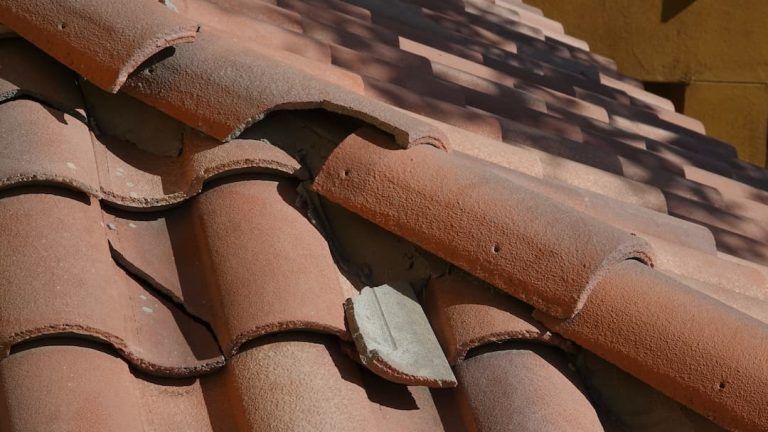
Before you ring the insurer, find out what the repair actually costs. Most storm leaks we see on York roofs turn out to be a small job: a few slipped slates, a couple of broken pantiles or a section of ridge re-bedded. That is typically £150 to £350. Medium repairs, such as a valley section or a run of flashing, are £400 to £900, and same-day or next-day reactive repairs run £250 to £750 depending on scope. Compare those with your excess. If the repair sits close to it, the claim pays you little or nothing, and a claim on record may still affect what you pay at renewal.
There is also the question of scale. In our experience most insurers will not get involved in a big way, with a loss adjuster and a site visit, for storm damage below roughly £5,000. Below that level they tend to settle on the paperwork: your photos and a roofer’s report.
A small roof repair is rarely worth claiming for. If the job is £150 to £350, paying it yourself is often cheaper than the excess plus the effect on next year’s premium. Claim when the damage is bigger, or when ceilings and contents have been hit too.
05Roof leak insurance claim: how to make it
If the damage is worth claiming for, the order you do things in matters. Making the roof safe first does not void the claim. Insurers expect you to limit the damage, and leaving a roof open to the rain for days while you wait for a call back can count against you. Our emergency roof repair service gets a tarpaulin over the affected area, weighted and sealed, usually the same day or the next morning. A temporary make-safe is typically £180 to £350, and it comes off the price if we do the permanent repair. If water is coming in right now, our guide on what to do when the roof is leaking covers the first hour.
The report is where a roofer earns their keep. When a storm has done the damage we photograph everything from the scaffold and write up what failed, why it failed, exactly what the repair involves and what it costs. Most insurers accept that report directly for residential roof damage under £5,000, which keeps a smaller claim moving without waiting weeks for an adjuster. It also tells you honestly when the cause looks like age rather than weather, so you do not waste a claim. If the leak is at the junction of two roof slopes, our roof valley guide explains what we will be looking at.
A typical temporary make-safe in York, taken off the permanent repair. Insurers expect you to limit damage, so this is money well spent before the claim. EJL emergency roof repair, York
Whether or not you claim, the next step is the same: get the roof looked at properly. For a storm that has just been through, book an emergency make-safe; for damage that can wait a few days, arrange a free survey for roof repairs. Every price is indicative and plus VAT, and your final price is fixed in writing within 24 hours of the free survey.
06Questions we hear every week
Does home insurance cover roof leaks?
How do I make a storm damage roof insurance claim?
Will getting the roof made safe void my claim?
Is it worth claiming on insurance for a small roof repair?
Get a fixed figure for your roof
Two minutes with the estimate tool gives you a realistic band now. The free survey turns it into a written price, fixed for as long as you need to decide.