
Roofing materials · 02
Clay pantile.
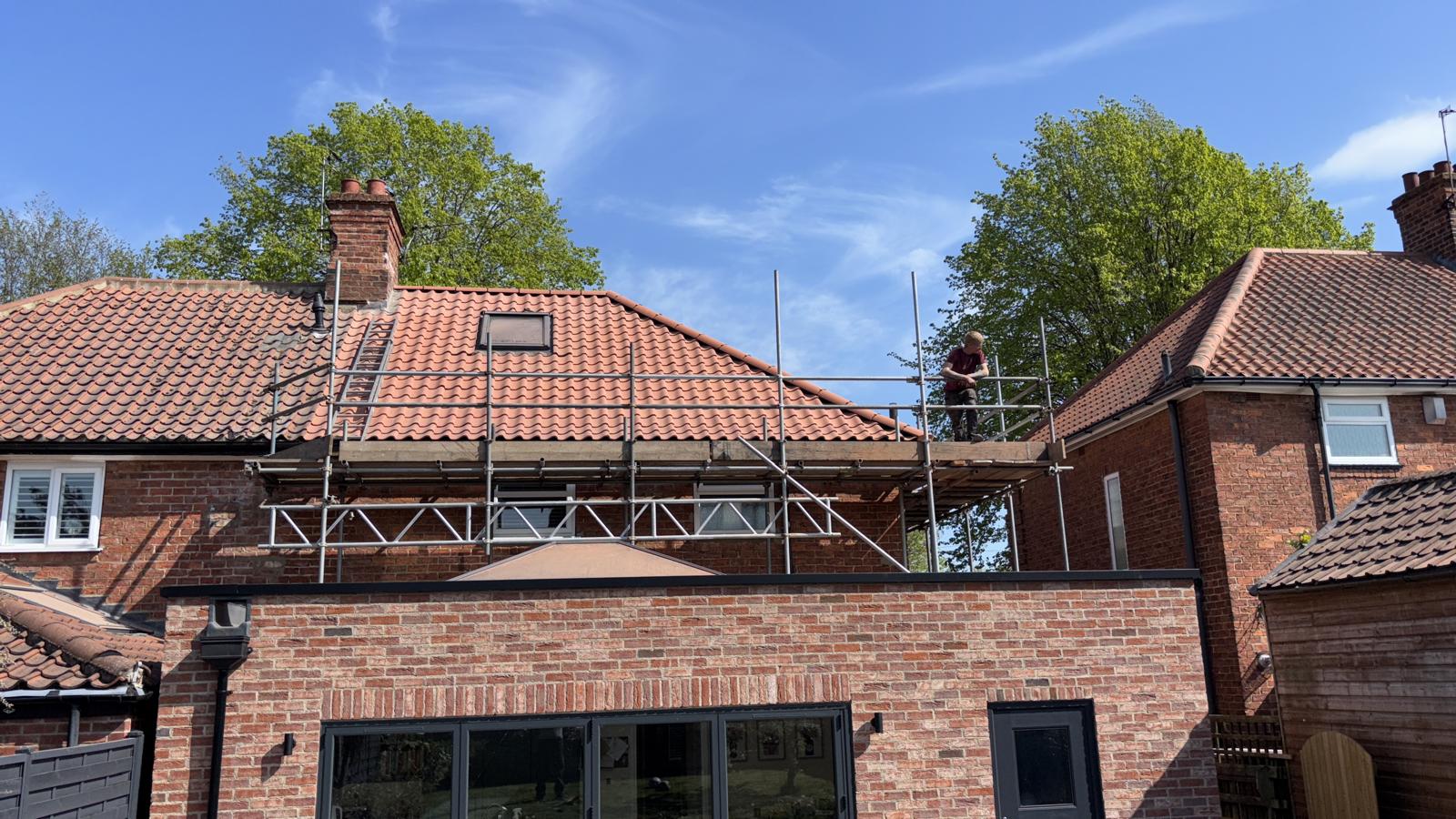
The rolling orange-red Yorkshire roofline.
The S-shaped clay pantile is the traditional Yorkshire roofline, the rolling orange-red roofs of the Vale of York.
Fired clay keeps its colour for life and a pantile roof lasts 60 years or more, long after a concrete tile has faded and started growing moss. The colour is fired through the clay, not coated on.
It is the covering conservation officers expect on visible slopes, and a mismatched concrete patch is the quickest way a period terrace loses its face. Single-lap pantiles are less forgiving to lay, so the side laps and verge details have to be right.
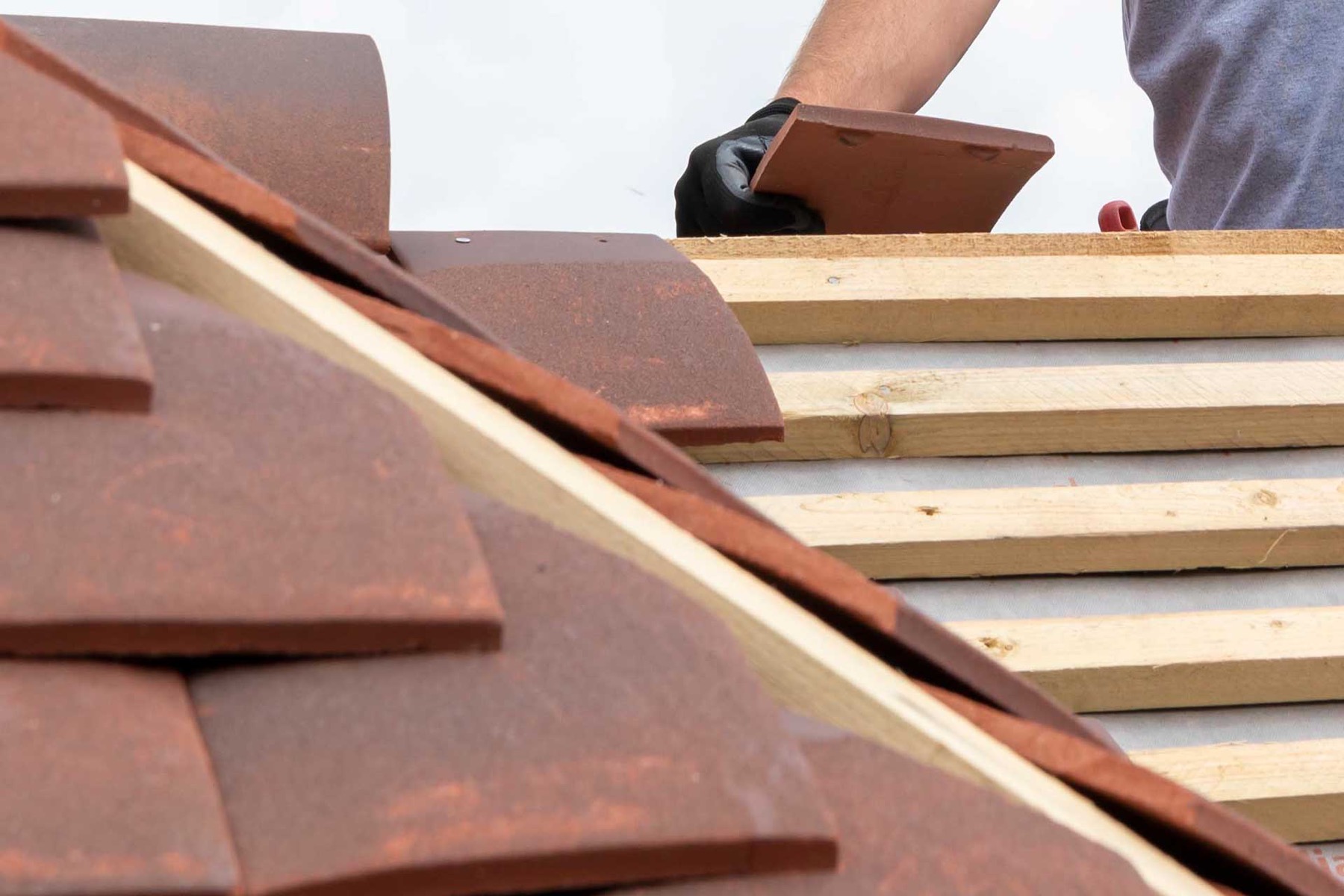
The colour is fired through the clay. It never fades.
The colour is fired right through the tile, not coated on, so a clay roof holds its orange-red for 60 years or more where a concrete tile fades and grows moss in a couple of decades. Laid to BS 5534, with the side laps and verges done right so wind-driven rain has nowhere to go.
Is clay pantile right for your roof?
For it
Best for period and conservation roofs: terraces, cottages and farmhouses with the rolling Yorkshire roofline, and any conservation-area roof where the street is clay. The colour is fired through, so it never fades, and reclaimed stock lets a repair sit flush with the originals.
Against it
Not for very low pitches or tight budgets. Pantiles want a reasonable pitch, single-lap tiles are less forgiving to lay, and on a modern estate already built in concrete the cheaper covering is often the sensible choice.
What a pantile roof costs.
About 20 per cent more than concrete tile to buy and to fit, with reroof bands sitting between concrete and slate. On a period or conservation roof, where matching and colour matter, that premium is well spent.
For reroof figures by property size, see the new roof cost page. A free survey turns the band into a fixed written quote within 24 hours.
Price your own roof in about two minutes →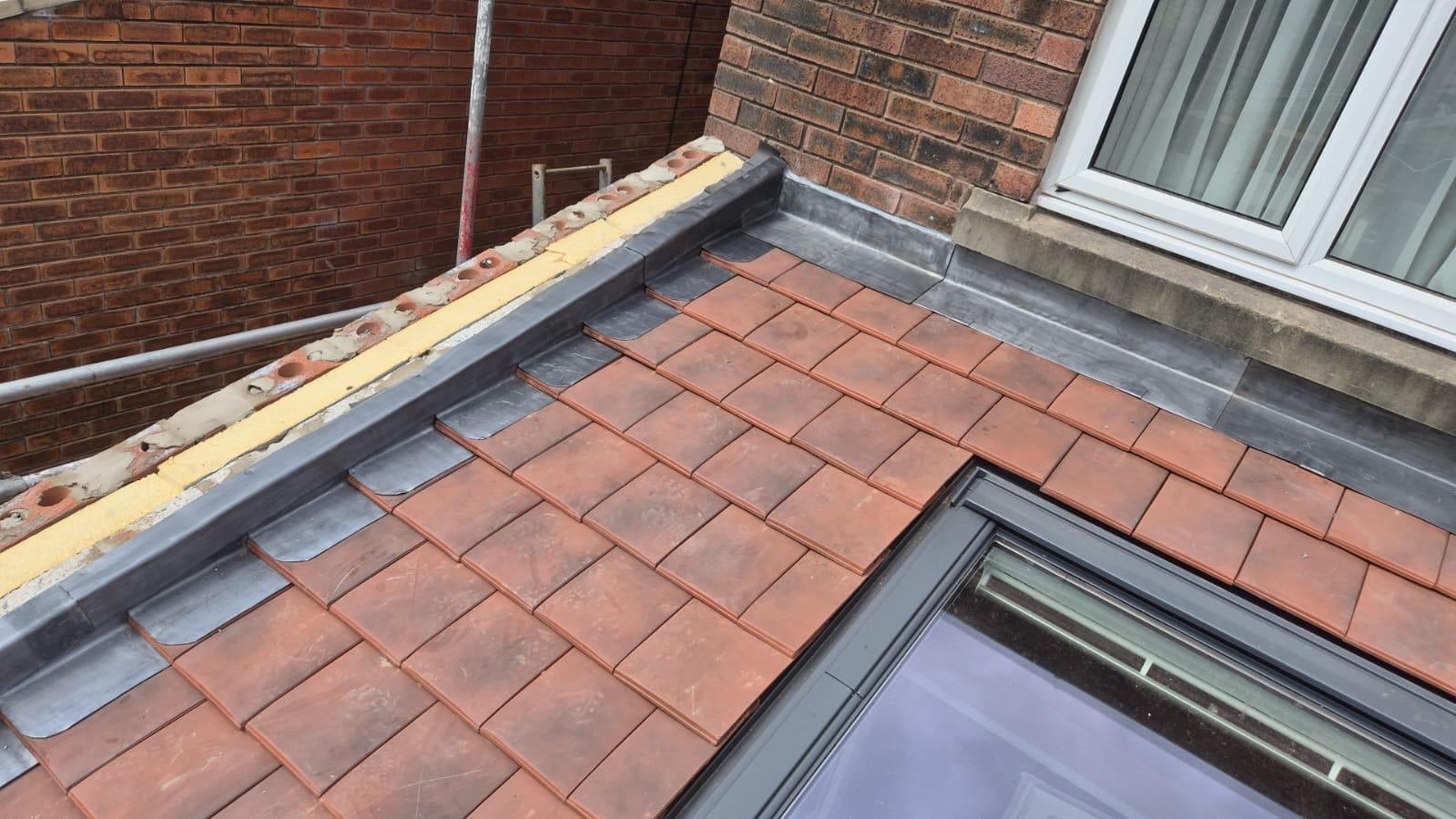
Matched to the street, tile for tile.
Clay pantile is the other half of York's roofscape, alongside slate, and it runs right across the Vale, through the older parts of Acomb and Clifton and out to Easingwold, Stamford Bridge and the village terraces. In conservation areas, like-for-like clay on visible slopes is usually a condition of consent. We fit pantile roofs across York, Haxby and Stamford Bridge, on roof repairs and new roofs alike.
The profile and the match
A 1930s pantile has a different profile to a modern one, so matching an existing roof takes the right reclaimed stock. For repairs we source reclaimed pantiles that sit flush with the originals rather than beside them looking new.
Matching is the whole point of a pantile repair done well, which is why we read the profile before we quote and never leave a mismatched patch on a period roof.
Surveyed, matched, underlaid, laid
- Send a photo or ring. WhatsApp a picture of the existing pantiles. The profile tells us a lot about the era and what will match, free.
- Free survey and match. We read the profile, check the pitch and the timbers, and identify the right new or reclaimed pantile to match the roof.
- Strip and re-underlay. Old covering off, timbers made good, then new breathable underlay and treated battens set to the correct gauge.
- Laid and detailed. Pantiles laid to BS 5534 with the side laps and verges done right, lead valleys and flashings dressed, and the roof photographed before we leave.
Every pantile roof is laid to BS 5534 and carries our 20-year workmanship guarantee, in writing.
Clay pantile questions
What is the difference between clay pantiles and concrete tiles?
How long do clay pantiles last?
Are clay pantiles more expensive than concrete?
Can you match my existing pantiles for a repair?
Do I need clay pantiles in a conservation area?
Pantile roof to match or replace?
Ring Elliott, or message on WhatsApp with a photo of the existing pantiles. Fixed quote in 24 hours, no pestering afterwards. Or get an instant estimate in about two minutes.
07500 544781 WhatsApp a photo